On Wednesday, U.S. President Donald Trump ordered the Department of War to enter into long-term contracts with coal-fired power plants to power military installations. This took place a week after U.S. Secretary of the Interior Doug Burgum introduced “Coalie” on social media. Coalie is an animated cartoon nugget of coal with a yellow helmet, jacket and boots.
Coal plants — where Coalie is presumably burned — have grown old, and most are near retirement age. About 75% of U.S. coal capacity is over 40 years old, and the average life of a coal plant is about 50 years. U.S. employment in coal mining was at a high around 1923 and has dropped by about 95% in 2026. Coal plants have become comparatively expensive to operate, compared to energy generation through renewables and fossil gas.
The facts actually show that over the two Trump Administrations, the U.S. government retired more coal capacity (57 gigawatts) than across the two Obama Administrations (48 gigawatts) and under the one Biden term (41 gigawatts). This was likely not due to Trump’s admiration for bird-hungry renewables. This was likely a reflection of the impracticalities of coal-fired power generation. Clean energy has comprised 96% of U.S. new electricity generation capacity added to the grid in 2025 because it is cheaper, safer and more secure for us all.
Donald Trump has become the deceptive carnival barker for the dying fossil fuel era. Yet, I’m grateful we are not all being seduced by these exaggerated and nonsensical claims.
Also on Wednesday, CU Boulder and the Colorado Office of Economic Development and International Trade (OEDIT) announced a new initiative to serve important communities in the northwest of the state as they transition from coal-driven economies. This is some good news, against political headwinds across the plains from the DC swamp.
Coal deposits are generally the remains of ancient swamps. Millions of years ago, plants evolved on land, and coal deposits were formed from the remains of these organisms. The largest coal formations were formed during what is now called the Carboniferous age, 345-280 million years ago.
Thousands of years ago, the sun was what humans relied on primarily for energy. Indirectly, it provided food (through photosynthesis) for energy and physical labor. As early industry energy beyond manual labor power was needed for the growing demands of society, people began to tap into carbon-based energy sources. Wood, wind and water power, as well as fossil fuel energy, were harnessed increasingly over time. It has been documented that as early as 2500 BC, Babylonians used petroleum, and around 1100 BC Chinese mined coal and fossil gas as energy sources. Yet it was only about 250 years ago — while a pluralistic democracy was born on one side of the pond through the American Revolution and an economic era was ushered in on the other side with the Industrial Revolution — that coal came into use on a large scale for energy generation. Coal — along with petroleum and fossil gas — then enabled many routes to development, through new capabilities to refine metals, and boost higher levels of consumption of food, water, shelter, clothing, transportation, communications, health care and more.
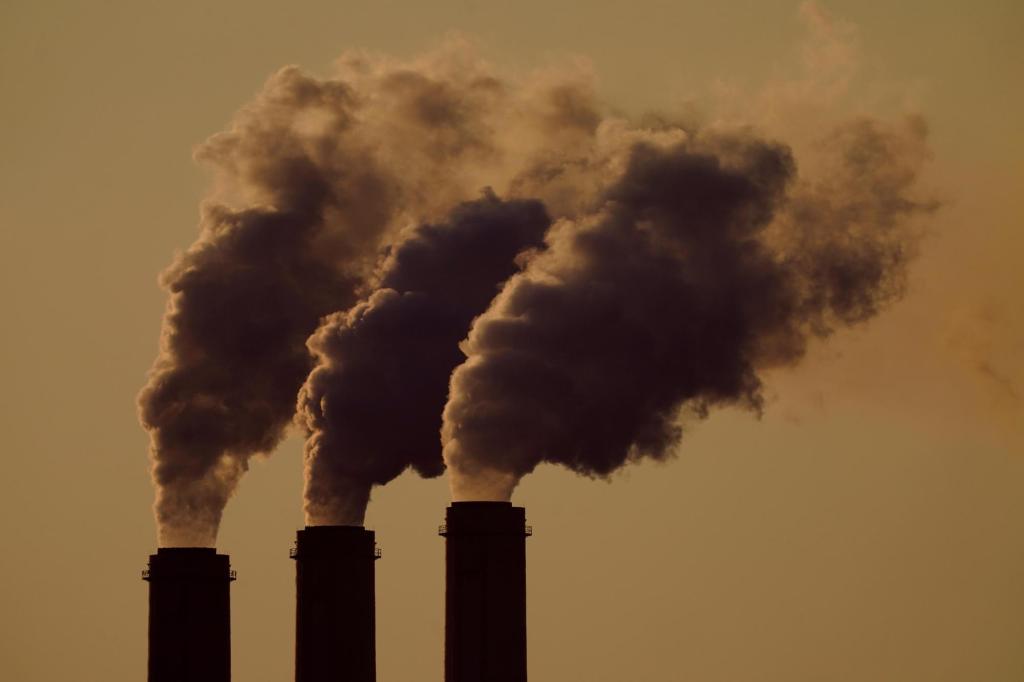
Yet, over the past 100 years, it has become well established that coal is a dirty fuel that contributes significantly to climate change through carbon dioxide (CO2) emissions. Burning coal produces about 70% more CO2 per unit of energy than fossil gas and about 30% more than oil. In addition to its significant contribution to climate change, coal also contributes to poor air quality and threats to public and environmental health. The reference to “clean” coal only refers to lowering sulfur and soot released into the atmosphere when coal is burned; it has no connection to lowering the amount of carbon dioxide released per lump.
Coalie is a combustible sedimentary rock composed primarily of carbon, oxygen and hydrogen. Coalie represents tired efforts to promote old ways of generating energy with terrible environmental and economic impacts. It is time to pay tribute to, yet say goodbye to, coal as a 20th-century energy source. Coalie is a caricature of the Trump Administration’s efforts to effectively weaken U.S. security and safety in the 21st century.
(Read my August 2025 columns for discussion of the endangerment finding repeal.)
This is a biweekly sustainability and environment column authored by Max Boykoff. Max is a faculty member at the University of Colorado Boulder, though these the views expressed here are based upon his scholarly expertise and research/creative experience as well as personal views and should not be considered the university’s official position on any specific issue.
Boykoff: Requiem for ‘Coalie’ on Valentine’s Day


RELATED ARTICLES