

ADVERTISING
MullenLowe, an iconic Massachusetts brand in the world of advertising, will disappear following the latest megamerger between two industry giants: Omnicom’s $13 billion purchase of MullenLowe parent Interpublic Group. The deal closed last week, and the details of the aftermath became clearer on Monday. Omnicom confirmed MullenLowe will be among the IPG brands that will be folded into existing Omnicom agencies; in MullenLowe’s case, it will become part of TBWA. In contrast, no changes are expected for Jack Morton, another IPG agency with Boston roots. IPG’s Weber Shandwick, one of the biggest PR firms in Boston, will also keep its name under the new ownership. (IPG already sold Boston-based Hill Holliday about two years ago to a New Zealand marketing firm, Attivo Group.) On Monday, Omnicom confirmed it’s cutting around 4,000 jobs from the combined company. However, a spokesperson for Omnicom said that “while there may be some consolidation of office space, overall [the acquisition] will have an insignificant impact on the combined company’s presence in Boston.” (The combined company will be led by John Wren, Omnicom’s longtime chief executive.) Mullen’s roots can be traced back to 1970, when the firm was launched by founder Jim Mullen on the North Shore. For much of its existence, the agency was run out of a mansion in Wenham, before relocating to Boston in 2009. IPG had acquired Mullen in 1999 from its founder, who also had a career as a racecar driver for much of the time he ran the firm; IPG later merged it with sister agency Lowe and Partners in 2015. — JON CHESTO
TRAVEL
Air travelers in the United States without a REAL ID will be charged a $45 fee beginning in February, the Transportation Security Administration announced Monday. The updated ID has been required since May, but passengers without it have so far been allowed to clear security with additional screening and a warning. The Department of Homeland Security says 94 percent of passengers are already compliant and that the new fee is intended to encourage travelers to obtain the ID. REAL ID is a federally compliant state-issued license or identification card that meets enhanced requirements mandated in the aftermath of the Sept. 11, 2001, terrorist attacks. Obtaining the ID — indicated by a white star in a yellow circle in most states — means taking more documents to the motor vehicle agency than most states require for regular IDs. TSA officials said that paying the fee does not guarantee verification, and travelers whose identities cannot be verified may be turned away. If approved, however, the verification covers a 10-day travel period. The fee can be paid online before arriving at the airport. Travelers can also pay online at the airport before entering the security line, but officials said the process may take up to 30 minutes. — ASSOCIATED PRESS
LABOR
Starbucks will pay about $35 million to more than 15,000 New York City workers to settle claims it denied them stable schedules and arbitrarily cut their hours, city officials announced Monday. The company will also pay $3.4 million in civil penalties under the agreement with the city’s Department of Consumer and Worker Protection. It also agrees to comply with the city’s Fair Workweek law going forward. A company spokesperson said Starbucks is committed to operating responsibly and in compliance with all applicable local laws and regulations in every market where it does business, but also noted the complexities of the city’s law. Most of the affected employees who held hourly positions will receive $50 for each week worked from July 2021 through July 2024, the department said. Workers who experienced a violation after that may be eligible for compensation by filing a complaint with the department. The $38.9 million settlement also guarantees employees laid off during recent store closings in the city will get the chance for reinstatement at other company locations. — ASSOCIATED PRESS
ECONOMY
Deals promoted as some of the best of the holiday season are expected to keep people across the United States glued to their computers and smartphones as the post-Thanksgiving shopping marathon wraps up on Cyber Monday. Experts expect consumers to drive record Cyber Monday spending this year, despite wider economic uncertainty. Adobe Analytics estimates that US shoppers will spend $14.2 billion online Monday, or 6.3 percent more than in 2024. Spending is expected to peak between the hours of 8 p.m. and 10 p.m. local time, when Adobe expects $16 million to pass through online shopping carts every minute nationwide. US consumers already spent $11.8 billion online for Black Friday, $6.4 billion on Thanksgiving Day, and another $11.8 billion over the weekend — exceeding Adobe’s forecasts. While the amount of money going into online shopping carts is expected to reach new heights Monday, rising retail prices also may contribute to any record sales figures that materialize. Consumers may be buying fewer total items. Experts say tighter budgets are causing many to shop with more precision than in years past — such as focusing on a few “big ticket” purchases, for example, and spreading out what they buy over days of promotions in hopes of getting the most bang for their buck. — ASSOCIATED PRESS
TECH
The Supreme Court on Monday grappled with the practical implications of a closely watched copyright clash testing whether internet providers can be held liable for the piracy of thousands of songs online. Leading music labels and publishers who represent artists ranging from Bob Dylan to Beyoncé sued Cox Communications in 2018, saying it had failed to terminate the internet connections of subscribers who had been repeatedly flagged for illegally downloading and distributing copyrighted music. At issue is whether providers like Cox can be held legally responsible and be required to pay steep damages — $1 billion or more — if they know that customers are pirating the music but do not take sufficient steps to terminate their internet access. Justices from across the ideological spectrum on Monday raised concerns about whether finding for the music industry could result in internet providers being forced to cut off access to large account holders such as hospitals and universities because of the illegal acts of individual users. After nearly two hours of argument, a majority of justices seemed likely to side with Cox and to send the case back to the 4th US Circuit Court of Appeals for review under a stricter standard. Several justices suggested the company’s “mere knowledge” of the illegal downloads was not sufficient to hold Cox liable. — NEW YORK TIMES
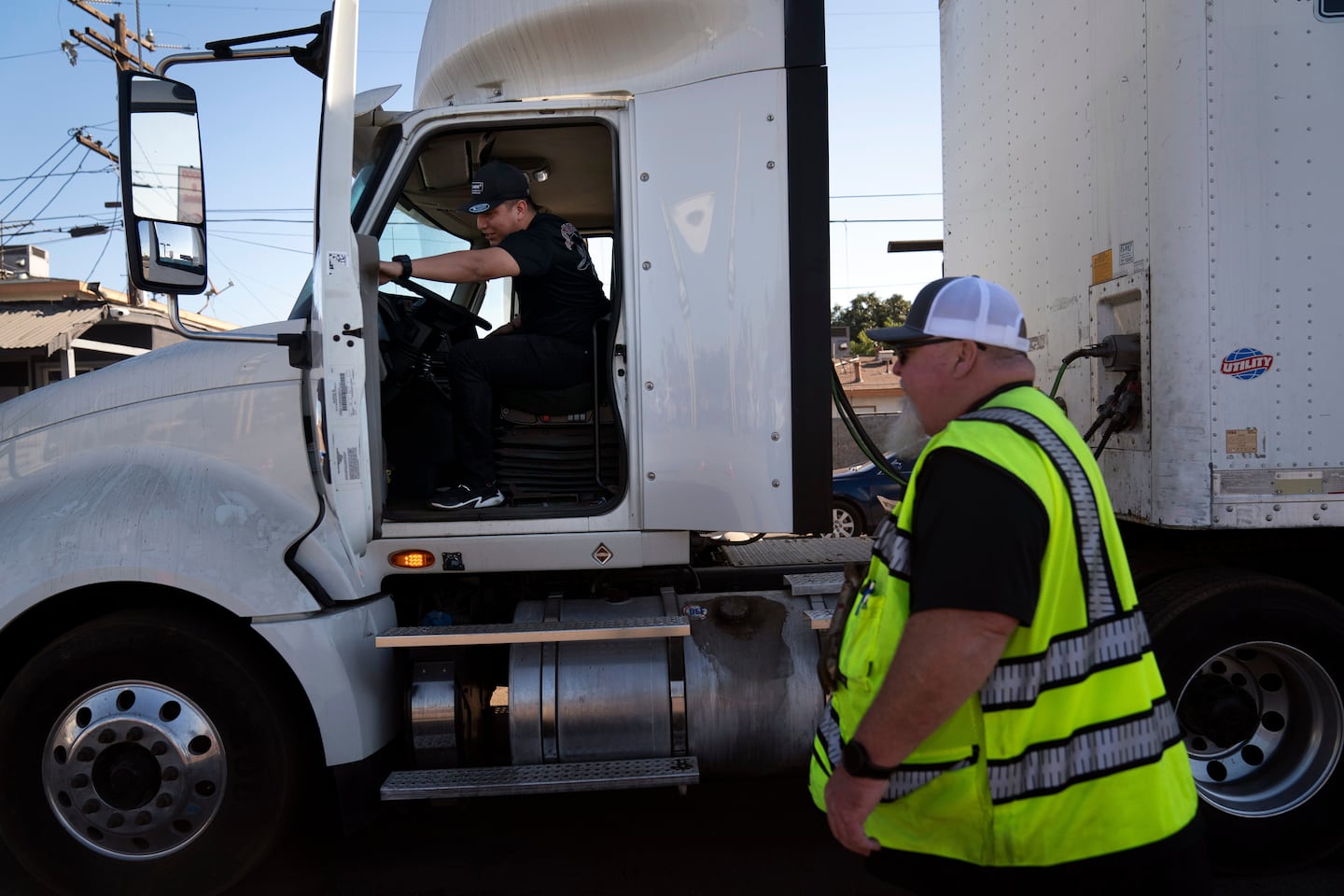
Federal review finds 44% of US trucking schools don’t comply with government rules


RELATED ARTICLES

