

Audio recordings from the airport control tower indicate the truck was initially cleared to cross the runway before a controller tried to pull it back to avoid a collision. The unnamed controller repeatedly told the vehicle to stop and diverted incoming aircraft from landing.
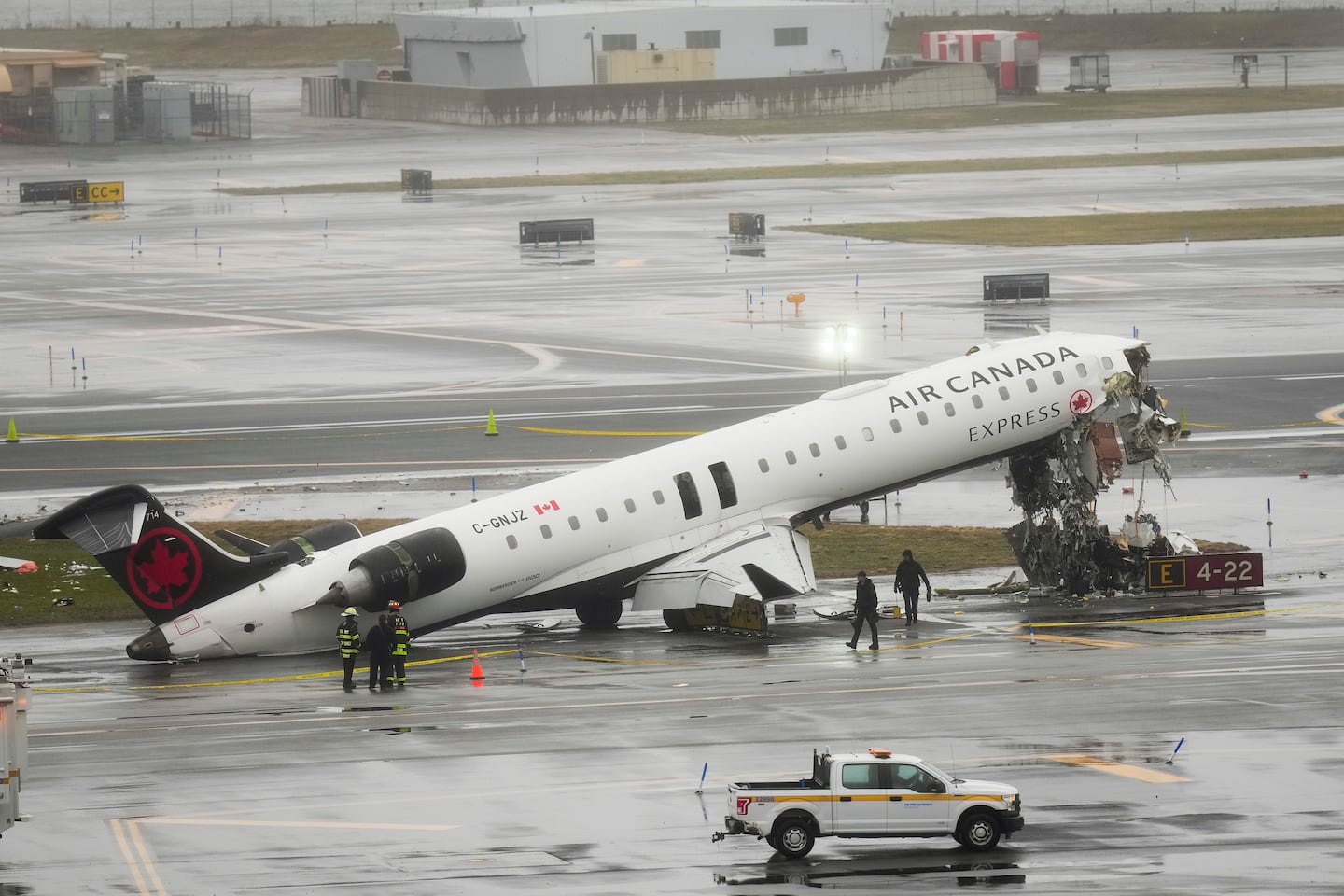
Photos and videos from the crash’s aftermath show the jet’s nose crushed and tilted upward, with debris hanging from the mangled cockpit. Stairways used to evacuate passengers were pushed up to the emergency exits and the damaged emergency vehicle lay on its side nearby.
The pilot and copilot were the only confirmed fatalities. Their names have not been released, but both were based in Canada, according to the Port Authority of New York and New Jersey, which operates the airport.
About 40 passengers and crew members were also taken to area hospitals, some with serious injuries, the authority said. Most were released as of Monday morning.
Two Port Authority employees traveling in the fire truck also suffered injuries, but they were not believed to be life-threatening.
The Jazz Aviation flight, which was operating on behalf of Air Canada, had about 70 passengers and four crew members on board as it landed from Montreal-Pierre Elliott Trudeau International Airport.
LaGuardia was shut down following Sunday’s crash and all air traffic was diverted. It is expected to remain closed until at least 2 p.m. Monday as National Transportation Safety Board investigators continue their probe.
The crash and temporary closure adds further misery as US airports struggle under a shutdown over government funding during the busy spring break season.
LaGuardia is a major transit hub — the 19th busiest out of more than 500 airports in the country in 2024, according to the FAA.
The airport opened to commercial traffic in 1939 and is located in the New York City borough of Queens, some 9 miles (14 kilometers) from Manhattan.
It’s too early to say what factors contributed to the deadly mishap, but the crash underscores the challenges air traffic controllers have faced in recent years.
Air traffic controllers are not directly affected by the current shutdown, but they are considered essential workers and have been forced to work their stressful jobs without pay during prior shutdowns.
The partial shutdown has lasted more than a month and has caused long lines and frustration among travelers at airports across the country.
Hundreds of Transportation Security Administration agents have called in sick or quit their jobs rather than be forced to work without pay.
President Trump, in response, deployed immigration enforcement officers to supplement TSA agents on Monday.
Congress remains deadlocked over approving funding for the Department of Homeland Security, which oversees the TSA.
What to know about the crash at Laguardia


RELATED ARTICLES

