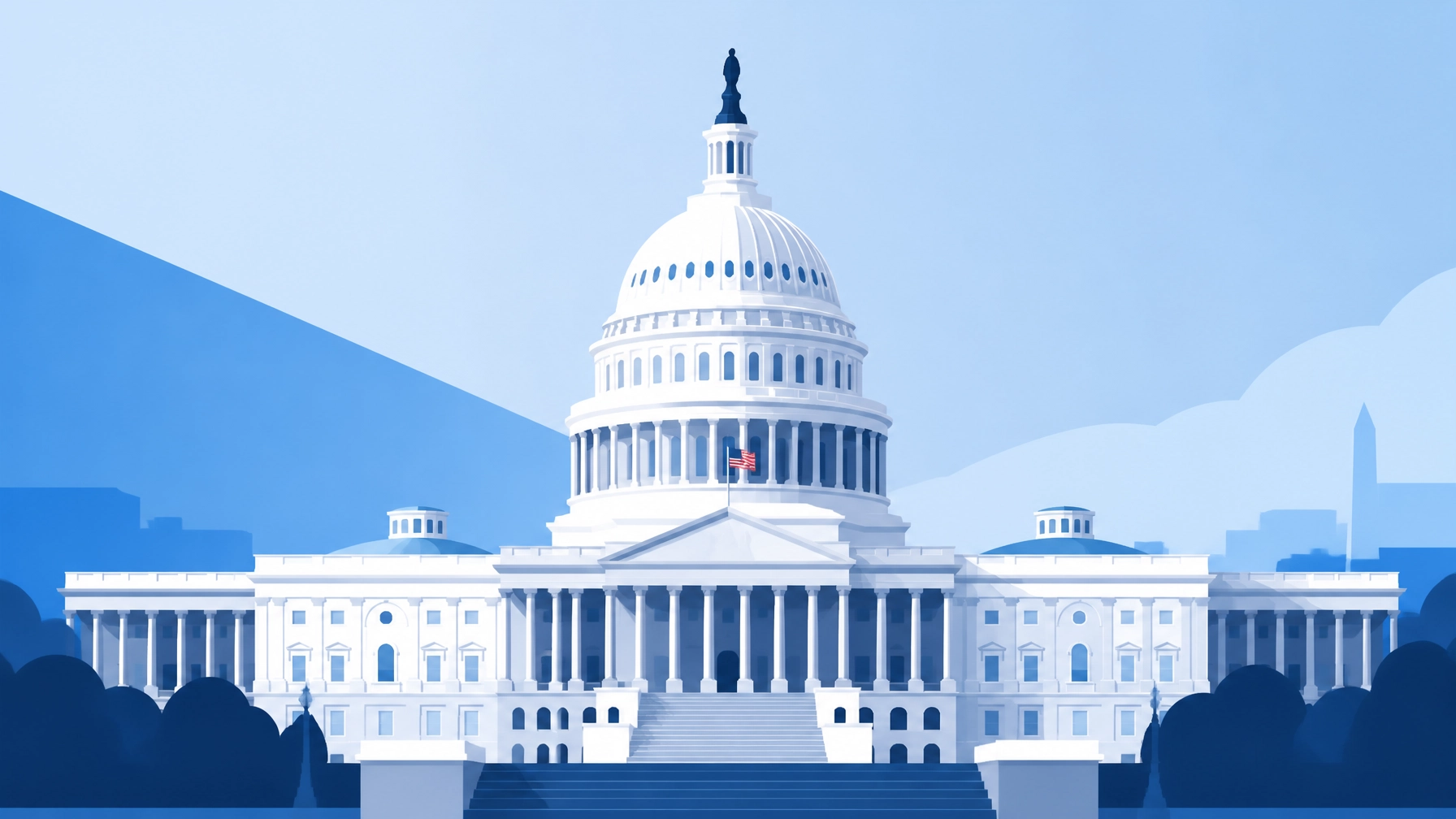
The Trump administration launches the Gold Eagle Initiative, the Supreme Court reshapes independent agency power, and Congress remains stalled ahead of the 2026 midterms.
WASHINGTON, D.C.: July 17, 2026
By Mark Ricci
The federal government is navigating multiple pressing issues this week: from a new cybersecurity initiative to significant Supreme Court rulings and ongoing legislative battles that highlight the deep partisan divisions shaping the 2026 political landscape. As the summer session continues, the intersection of executive action and judicial oversight has created a complex environment for federal agencies and private sector partners alike.
While the administration focuses on hardening national defenses against digital threats, the judiciary has issued a series of decisions that redefine the boundaries of presidential authority. Simultaneously, the legislative branch remains characterized by a persistent stalemate that has delayed critical policy progress across several sectors. These developments occur as both parties begin to shift their focus toward the upcoming 2026 midterm elections, where control of the House and Senate will be at stake.
White House Launches Gold Eagle Initiative

The Trump administration announced the "Gold Eagle Initiative" on July 14: a new cybersecurity coordination effort designed to address vulnerabilities in critical infrastructure. The program brings together federal agencies, private sector partners, and state governments to share threat intelligence and respond more rapidly to cyberattacks. This launch follows reports that the U.S. Treasury Department was recently targeted in a sophisticated breach, highlighting the urgency of the new program.
The initiative pairs open-source software maintainers with critical infrastructure operators in a shared reporting and remediation pipeline built on existing federal authorities and resources. The White House says the program represents a major step forward in protecting everything from power grids to financial systems from increasingly sophisticated threats. The legal basis for the program stems from Executive Order 14409: "Promoting Advanced Artificial Intelligence Innovation and Security," signed on June 2, 2026.
By leveraging frontier AI capabilities, the Gold Eagle Initiative aims to scan for software flaws and generate remediation guidance in real-time. The Cybersecurity and Infrastructure Security Agency (CISA) will serve as a central clearinghouse for this data, coordinating with the Department of Defense and the Department of Homeland Security. Officials stated that the program’s success relies on voluntary cooperation and the utilization of current agency budgets, as no new legislative funding has been secured for the initiative.
Supreme Court Delivers Major Rulings

The Supreme Court has issued several significant decisions that have immediate implications for federal governance. In a 6:3 ruling, the Court increased President Trump's executive powers to fire members of independent government agencies without having to give a cause. This decision backed the Republican president's decision to sack a Democratic Federal Trade Commission (FTC) member, Rebecca Slaughter. The ruling marks a significant shift in administrative law, potentially allowing greater presidential control over agencies previously considered shielded from political interference.
However, the Court maintained a boundary in a separate 5:4 decision. The justices refused to allow the administration to fire Federal Reserve Governor Lisa Cook, preserving the central bank's independence against an unprecedented challenge by the president. This ruling suggests that while the Court is willing to expand executive oversight in some regulatory arenas, it remains cautious regarding the independence of the nation’s monetary policy leadership.
The Court also addressed election law and personal litigation involving the president:
- Mail-in Ballots: In a 5:4 decision, the court upheld a Mississippi state law that allows mail-in ballots that are mailed by Election Day but received after Election Day to be counted. This rejected a challenge brought by the Republican National Committee.
- Civil Judgments: The court rejected the president's effort to overturn a jury judgment that he sexually abused and defamed E. Jean Carroll. The ruling maintains that the president must pay the $5 million in damages previously awarded.
- Pending Cases: The court is expected to decide a challenge to an executive order seeking to end birthright citizenship, as well as two cases regarding state bans on transgender girls participating in scholastic girls' sports.
These rulings come at a time when the administration is already testing the limits of executive power, such as the recent decisions regarding the acquisition of U.S. Steel. The judicial landscape remains a primary site of conflict for the administration’s core policy goals.
Legislative Gridlock Continues

Congress remains deeply divided, with House Republicans blocking some floor votes and frustration building on both sides of the aisle. The legislative stalemate has become a major issue ahead of the 2026 midterm elections, with voters increasingly concerned about the government's ability to function effectively. Leadership in both chambers has struggled to find common ground on appropriations, raising fears of a potential government shutdown later this fiscal year.
Key legislation on immigration, healthcare, and infrastructure has stalled, as partisan disagreements prevent progress on issues that affect millions of Americans. The gridlock has also complicated efforts to pass budget measures, raising concerns about the long-term stability of federal programs. Some analysts suggest that the lack of legislative activity has pushed the administration to rely more heavily on executive orders, similar to the strategies seen in previous administrations during times of crisis.
Democratic leaders have criticized the House majority for prioritizing ideological investigations over standard legislative business. Conversely, Republican leadership maintains that its focus on oversight and fiscal restraint is a direct response to voter mandates. This environment has resulted in one of the least productive legislative sessions in recent history, with only a handful of non-controversial bills reaching the president’s desk for signature.
Immigration Policy Under Legal Challenge
Federal courts continue to challenge aspects of the administration's immigration detention and deportation approach. Recent rulings have blocked certain enforcement actions, citing concerns about due process and civil rights. These legal setbacks have forced the Department of Homeland Security to pause several high-profile initiatives intended to streamline removals.
The administration has defended its policies as necessary for national security, but critics argue they are too harsh and unfairly target vulnerable populations. The legal battles are expected to continue throughout the summer, with potential implications for the 2026 election. Advocates for immigration reform are closely monitoring these cases, as they could establish new precedents for how the executive branch manages border enforcement and interior removals without specific new congressional mandates.
The tension between the executive branch and the judiciary on this issue mirrors earlier disputes, such as those involving REAL ID requirements and domestic travel restrictions. Until a definitive ruling from the Supreme Court or a legislative compromise is reached, immigration policy remains in a state of operational flux.
Foreign Policy Pressures

The administration is also dealing with significant foreign policy challenges, particularly regarding Iran. Ongoing tensions in the Middle East have complicated diplomatic efforts and raised concerns about U.S. involvement in another prolonged conflict. Indirect talks in Doha, Qatar, have focused on maritime security in the Strait of Hormuz, yet a comprehensive agreement remains elusive.
President Trump has been traveling and speaking on major national issues, including recent remarks at a Freedom 250 event and other appearances tied to the administration's messaging ahead of the midterms. These domestic appearances are often coupled with strong statements on the international stage, aimed at demonstrating a policy of "peace through strength." The administration has also been working to maintain the coalition of allies participating in major defense programs, stressing the importance of shared military investment during global instability.
The diplomatic track with Iran, mediated by Qatar and Pakistan, has seen limited progress on technical issues such as maritime traffic and financial incentives. However, the core issues surrounding Iran's nuclear program and sanctions relief remain unresolved. The administration continues to employ a combination of negotiation and economic pressure, a strategy that has kept the region in a state of cautious de-escalation without a formal settlement.
Looking Ahead
As the 2026 midterm elections approach, the government's ability to address these challenges will be under intense scrutiny. Voters are increasingly focused on issues like cybersecurity, healthcare costs, and immigration, and the outcomes of these policy debates could have significant implications for the balance of power in Congress. The political stakes are high, as both parties view the midterms as a referendum on the administration’s first two years of its current term.
The coming weeks will be critical in determining whether the government can move beyond gridlock and deliver results on the issues that matter most to Americans. With the Supreme Court still expected to release high-impact decisions and the Gold Eagle Initiative moving into its operational phase, the landscape of federal governance in 2026 continues to evolve rapidly. Observers will be watching closely to see if the current "pause" in hostilities abroad and the technical initiatives at home can translate into long-term stability for the nation.
Mark Ricci is a senior journalist covering federal governance, policy, and institutional affairs for USGov.News.